
Colonial theft: Why stolen artifacts still fill the world’s most famous museums
ART HISTORYHERITAGE & LEGACY
According to Robertas Ramanauskas, a history teacher in Lithuania and a member of the Lithuanian History Teachers’ Association and its Council, to understand the roots of this phenomenon we have to go back to early modern Europe:
Where does it begin
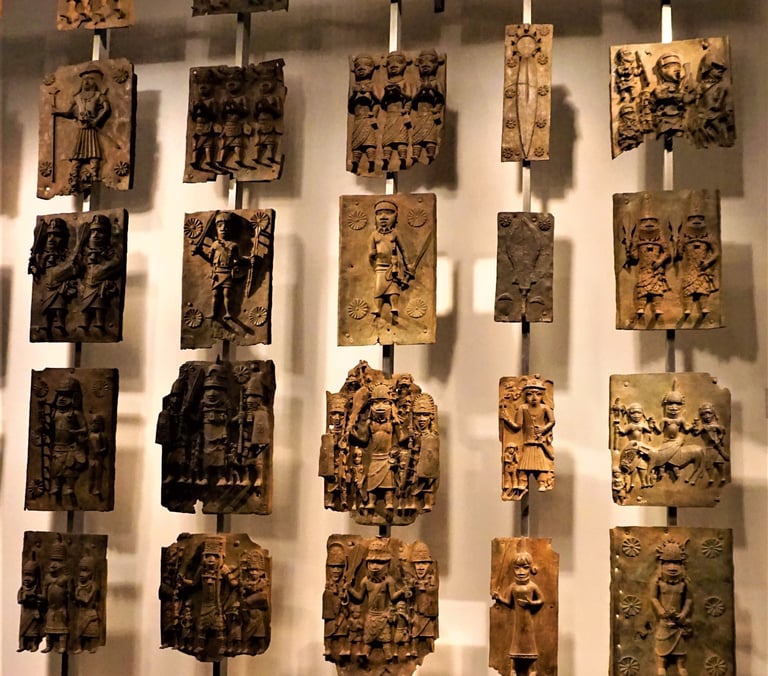
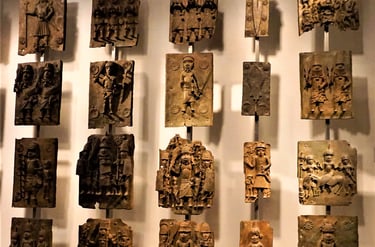
Benin Bronzes placed in British Museum which originally was taken from Nigeria during the expedition in 1897 .
Photo: Joyofmuseums, via Wikimedia Commons (CC BY-SA 4.0).
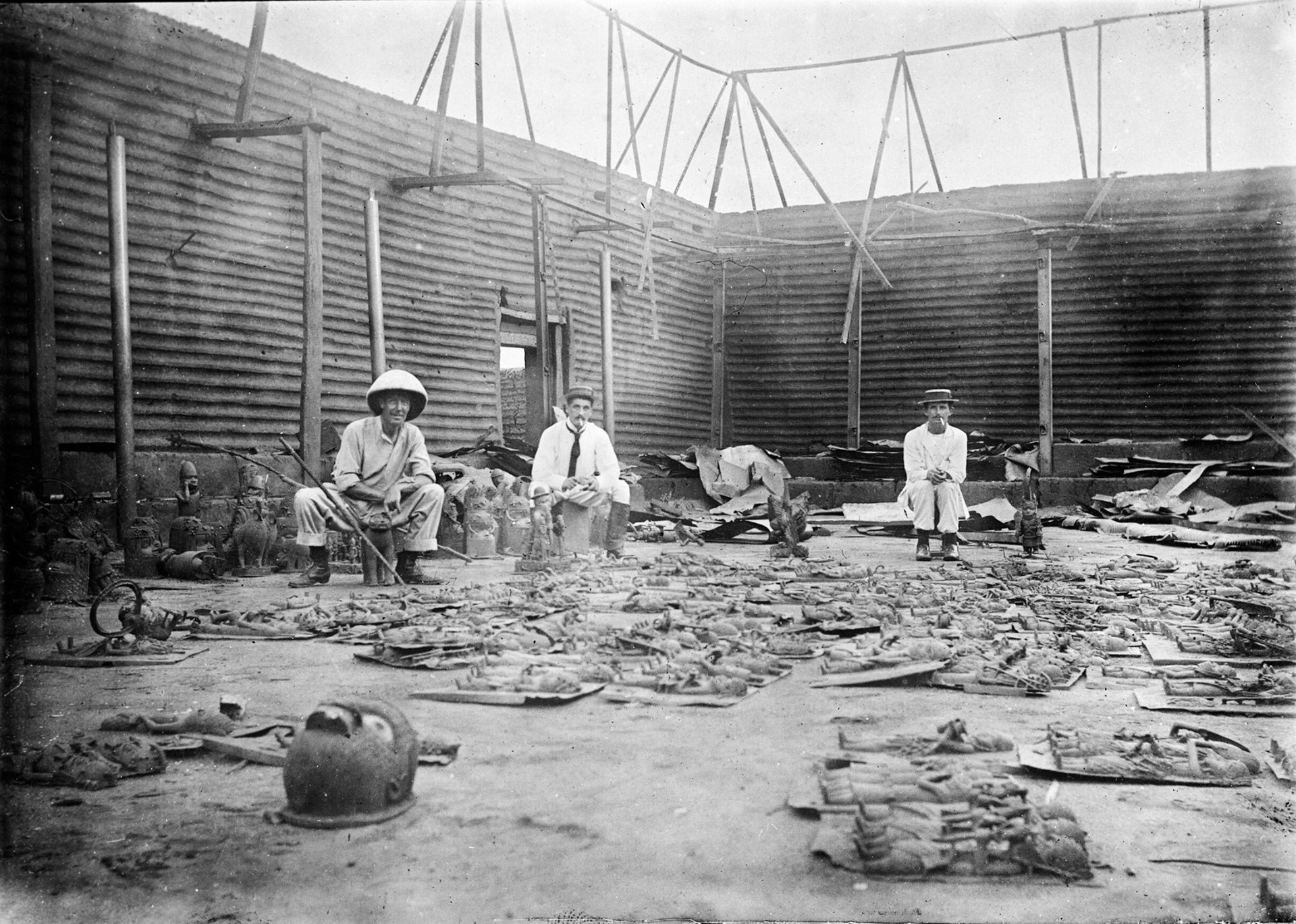
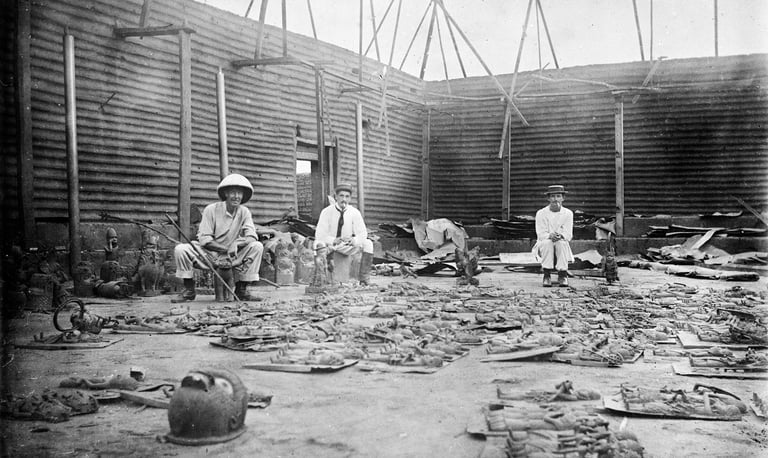
Burnt interior of Oba's compound during the siege of Benin City (present day Nigeria) , with bronze plaques and three British soldiers of the Benin Punitive Expedition in February, 1897.
Photo by : Reginald (CC0 -1.0).
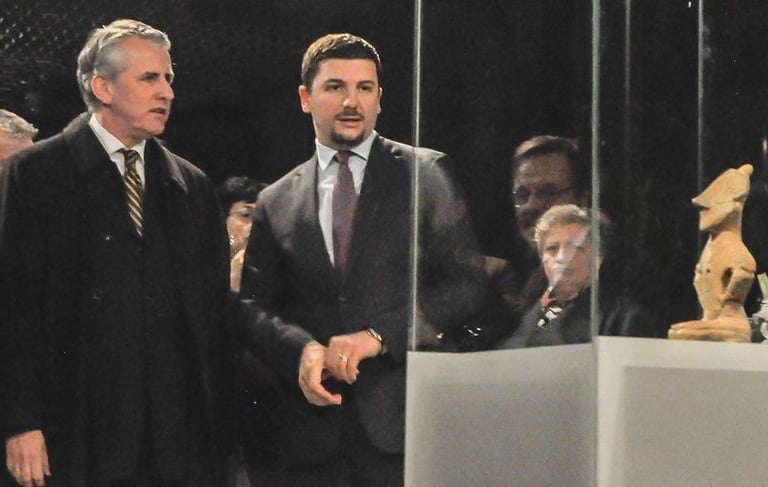
Kosovo minister of Science and Art Memli Krasniqi reviewing arheological artefacts returned from Germany after decades.
Photo: Ministry of Culture, Youth and Sports of the Republic of Kosovo (CC0 -1.0)
When UNESCO finally said enough, pushing a treaty to stop the illegal trade of cultural property. It wasn’t perfect, but it was enough for a fresh start. Later that opened the door for countries like Egypt, Greece, and Nigeria to start asking for their history back.
One of the first big wins came in 1993, when Turkey won a legal fight to get back the Karun Treasure from the Metropolitan Museum in New York. Since then, the pressure has only grown. In 2022, Germany agreed to return hundreds of Benin Bronzes to Nigeria pieces that had been looted by British troops in 1897. And just this year, in 2025, the Netherlands returned 119 stolen artifacts back to Nigeria, including royal regalia, altars, and ceremonial weapons according to AP News.
However even when there’s pressure to give things back, tracing stolen art isn't an easy thing to track down. No one knows for sure where some pieces came from. A lot were smuggled out with no records, sold under fake names, or passed through so many hands that their story vanished. So even today, it’s still really difficult to track what was taken, who it belonged to, and where exactly it was found.
The active theft of art and cultural artifacts began in the early 18th century during wars, expeditions, and colonial invasions. European empires swept through Asia, Africa, and the Middle East, taking not only land but also the cultural heritage which belong to locals - paintings, sculptures, and sacred objects. These items were shipped to Europe as trophies of power gifted to royal families, sold to private collectors, or lost in black markets.
Ramanauskas emphasizes that colonial theft was not accidental, but also ideological:
Art returns home
“The Renaissance spread across Europe almost like a fashion. Later, during the colonial period, this fascination turned into a fashion for collecting, gathering strange and exotic objects from Africa, Asia, and the Americas. These artifacts were admired, accumulated, and studied, but they were also taken out of their original cultural context and treated as objects of possession rather than heritage.”
If you ever have been or will be visiting the British Museum of Natural History you can notice plenty of significant historical pieces of art such as Benin Bronzes or Rosetta Stone. None of the mentioned examples belong to England nor to The British Museum. Benin Bronzes are numerous plaques, figurines and regalia taken from the Kingdom of Benin (modern Nigeria) during a British military expedition in 1897.
Rosetta Stone is a granodiorite stele bearing the same text in three scripts (Hieroglyphic, Demotic and Greek), created in 196 BCE. It was later discovered by a French expedition in Rashid, Egypt in 1799, and eventually became property of Britain after the defeat of the French in Egypt. And it’s only a few examples of hundred cases around various famous museums in the world. But why were these national artifacts taken and why, to this day, most historical artworks belonging to other countries are exhibited in museums in other countries as private property.
“There was a clear cultural racism. Local peoples were seen as inferior, not equal to Westerners. Colonizers believed these objects belonged to them anyway so why not profit from them, enjoy them, decorate themselves with them?”
For decades, there were no laws preventing this behavior. According to a 2023 study in the American Journal of Community Psychology, looting was often justified by colonial arrogance and racial hierarchies. The first major international effort to stop this came only in 1970, when UNESCO adopted a convention banning the illegal transfer of cultural property. By then, however, museums were already full of stolen artifacts, with no clear traces of their origin.
At the same time, Ramanauskas notes a paradox rarely discussed:
“In certain cases, collecting artifacts also meant preserving them. Many regions were unstable, there were uprisings, interethnic wars, religious conflicts. Sometimes local communities themselves destroyed artifacts, believing they held magical powers or posed a threat.”
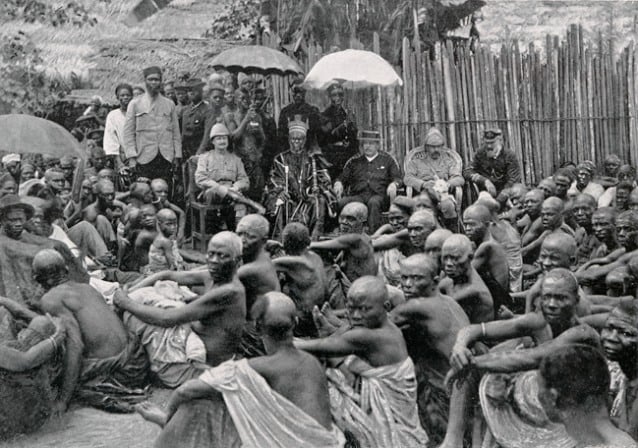
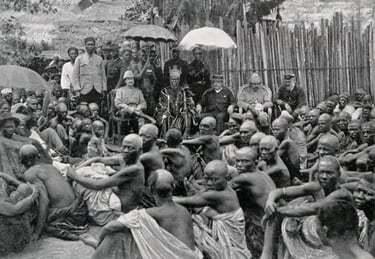
Photograph of the ceremony which formally incorporated the Ewi of Ado's kingdom in the British Lagos Protectorate. Ado was one of several Yoruba kingdoms situated in what is now Nigeria. Used as part of an online exhibition about the "Scramble for Africa".
Unknown author, from King's College London via Wikimedia Commons (CC BY-SA 4.0)
Unfortunately, this inconvenient reality also reflects the fact that some of the facts that have been discovered about the cultures that existed and exist in our world would not have been discovered if the artifacts had not been studied by scientists. However, this cannot be considered the main reason for theft.
Should stolen artifacs be returned?
The question of artefacts return remains deeply divided. Some countries actively seek the return of their artifacts, while others are accused of being unable or unwilling to protect them. Robertas also argues that there is no simple answer:
“The most important thing to understand is that cultural heritage is world heritage. The central question is not only who owns these artifacts, but whether they will survive. Over centuries, many objects passed from hand to hand sold in markets, hidden in private collections, or stripped of records, so their origins were erased. Today, even when countries demand their return, the key issue remains preservation: if a nation is capable of protecting its heritage, it should prove that and seek restitution through international law. At the same time, we must acknowledge that in certain political or religious contexts artifacts risk destruction, and in such cases public museum collections may be the only way to ensure their survival.”
The debate, therefore, is not just about ownership but about responsibility. As museums, governments, and scholars continue to confront colonial legacies, one thing becomes clear - the past is not over, and the question of who owns history still remains unresolved.