Heist in Louvre: France's pride humiliated in less than 10 minutes
CULTUREHERITAGE & LEGACYPOLITICS
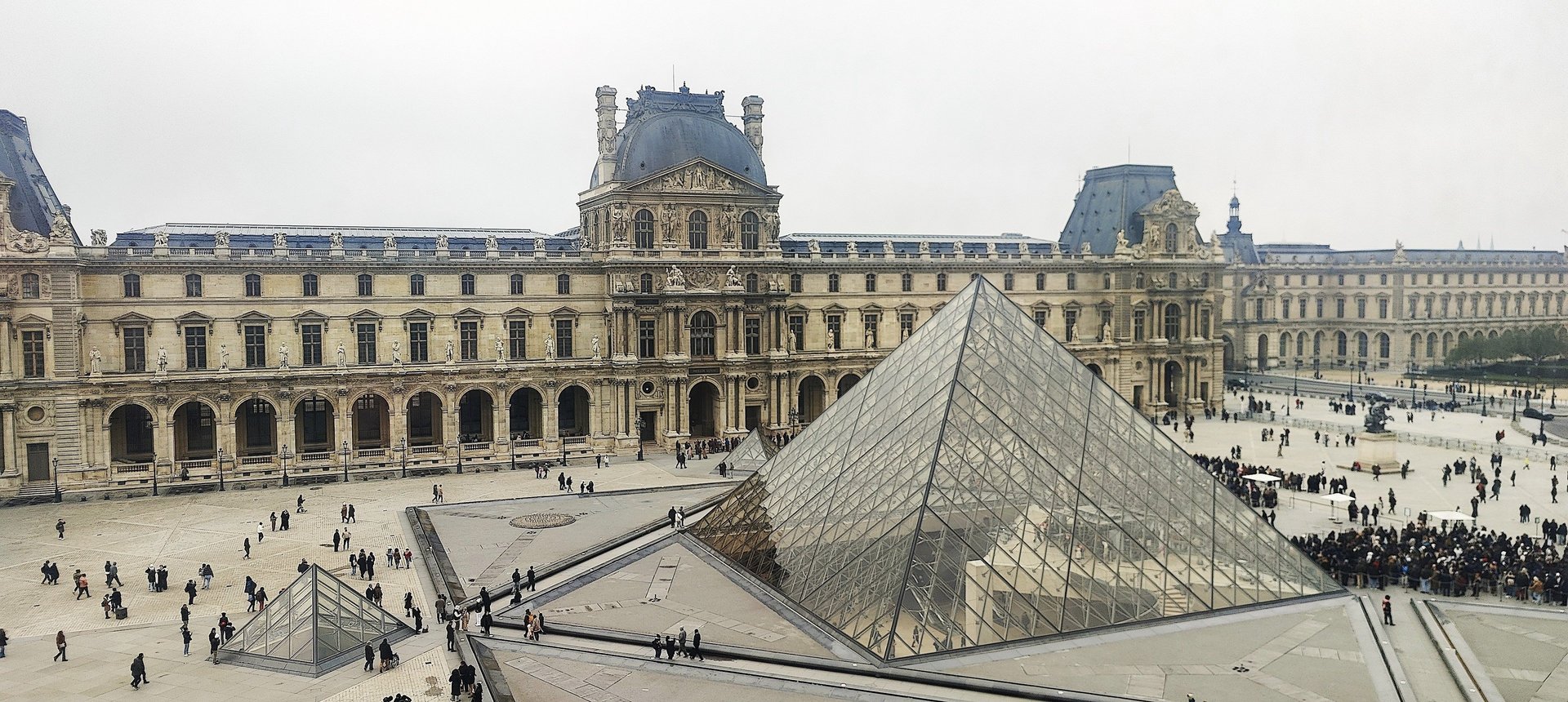
On the calm Sunday morning of October 19 in Paris something happened that didn’t happen in the last 27 years. 9:30 local time in the morning four thieves stole 7 pieces of “priceless” French artifacts from Louvre’s Galerie d’Apollon (Apollo Gallery) in around 7 minutes and managed to escape without leaving any footprints behind. From the fFrance police captured picture it turns out that a ladder had been placed behind the museum balcony, leading to a first-floor window, which two of them climbed up, while the other two waited below on two scooters which they escaped later.
It’s hard to imagine that in the 21st century such a thing despite all the professional security systems, modern CCTV cameras and AI recognition systems four unidentified people managed to calmly climb up in the room of one of the most popular museums on a bright morning and steal the historical French artifacts also called as invaluable national heritage.
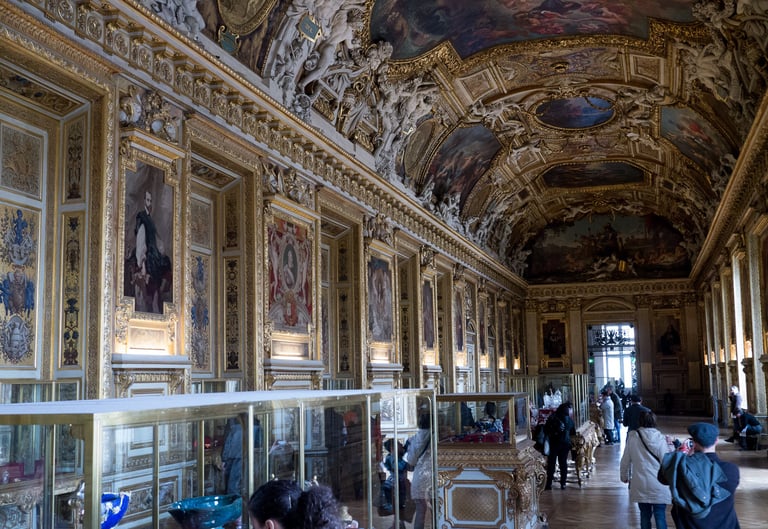
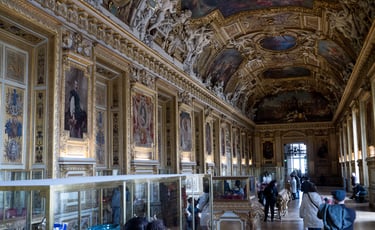
Galerie d' Apollon in Louvre which currently is closed for visitors.
Photo: Thomas Roessler, via Wikimedia Commons (CC BY-SA 3.0).
Heist of Louvre in 21st century
“Priceless” national heritage
According to The Guardian, on Sunday morning was stolen a Tiara necklace and earrings once worn by Queen Marie-Amélie and Queen Hortense, an emerald necklace and earrings belonging to empress Marie-Louise, a large brooch and tiara of Empress Eugénie and the crown of Empress Eugénie was found damaged dropped on the street outside the museum. The French Ministry of Culture named the stolen France artifacts “priceless” from a cultural and historical perspective. For those who like to talk about money, Reuters mentioned that stolen items can be valued at an estimated price of 100 millions euros.
Convicted ex jewel thief Larry Lawton at his interview for CNN said that there’s a few possible scenarios what thieves can do with the pieces of jewelry. “They could break them all off, sell the golds, diamonds and stones <…>. They could also wait a while and most of the time the insurance companies will put out an award later, it could be 1 million dollars right away <…>. Another way that they could give it to the person who hired them, who wanted the pieces and gave them a good reward.” hypothesized Larry Lawton to CNN journalist.
In an exclusive interview, Linas Makanavičius, a member of the Lithuanian community and Lithuanian historical heritage researcher based in Paris, reflected on the broader consequences. “It was a very sad, big and prestigious thing for the French and for the common self-esteem. When something like this happens, it is not just about the stolen items. It goes deeper into the consciousness of the people who see their heritage being vulnerable, unprotected,” he said. “This breach doesn’t only affect the museum or its security, it affects public trust in the state itself. People begin to ask: if they can't protect the crown jewels, what can they protect?”
Several audits of the Louvre’s security systems had reportedly been delayed, and warnings from independent experts were overlooked. “All of the security priorities in the Louvre Museum were focused on the security inside the building. The assumption was always that if someone tried to break in, they would be stopped once inside. But the perimeter was not quite secure, and that vulnerability had been pointed out repeatedly. And yet, nothing changed,” Linas Makanavičius noted.
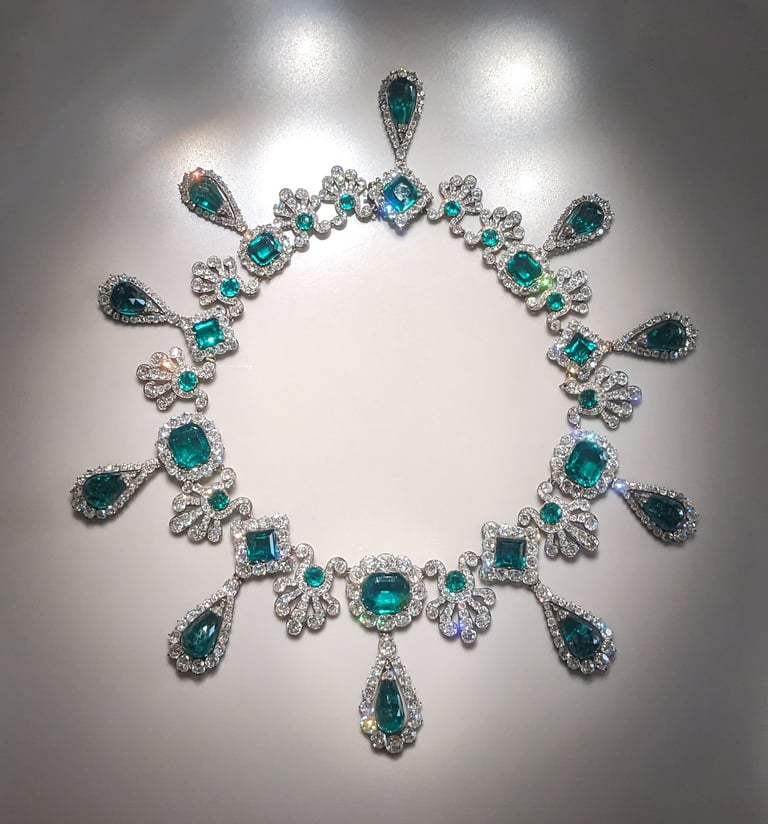
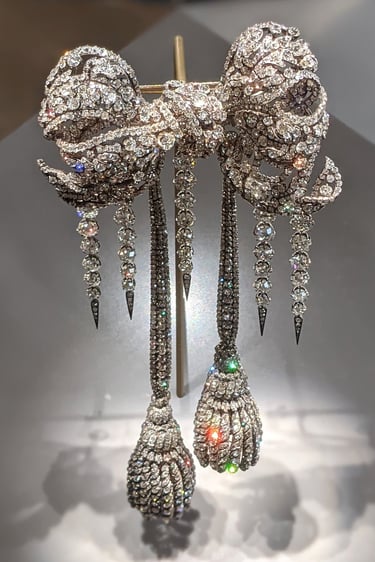
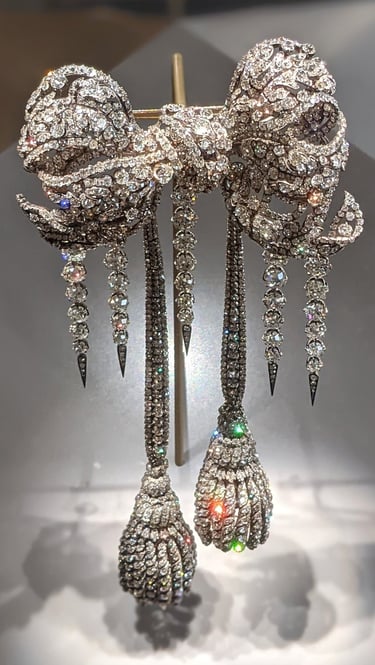
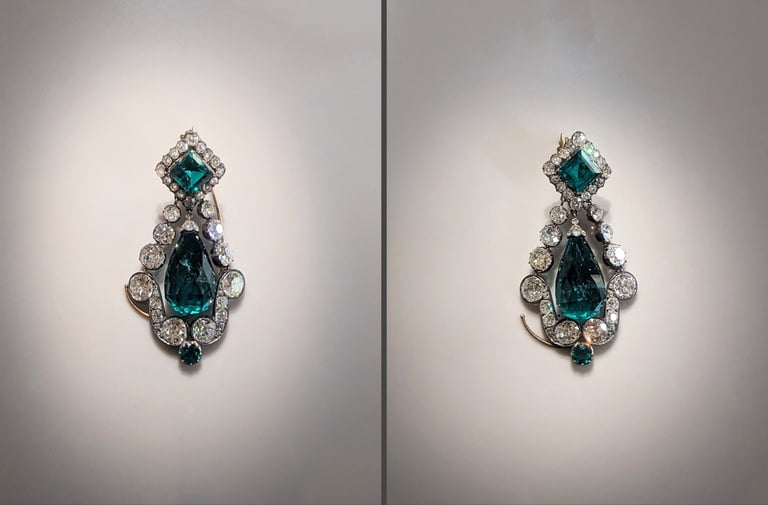
Marie-Louse necklace made out of emeralds, large corsage bow belonging to Empress Eugénie and pair of emerald earrings from Marie Louise's jewelry set. Photo: Shonagon, via Wikimedia Commons (CC0).
Limping France's politics
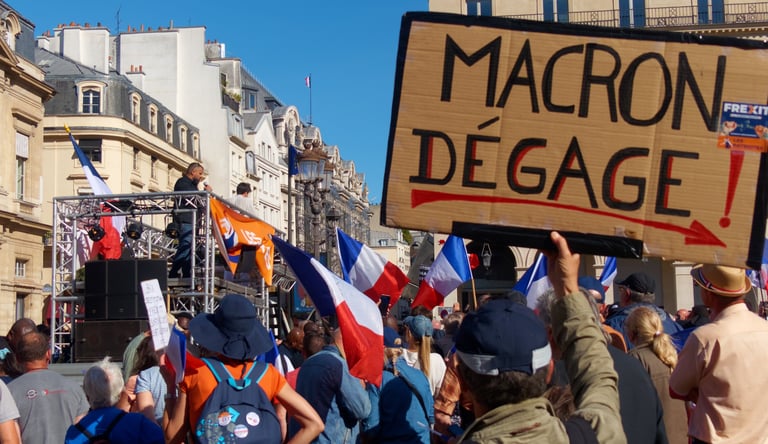
France is already being shaken by various events such as political instability, protests over spending cuts, and growing public frustration with the government of President Emmanuel Macron. Unfortunately the heist of Louvre also became a drop in this glass full of issues and added a symbolic blow that reached to the heart of national pride and cultural guardianship.
Justice Minister Gérald Darmanin admitted to Reuters, “What is certain is that we have failed to give a deplorable image of France.” His bluntness captured the public sentiment-a deepening loss of trust in the state's ability to protect what matters. Culture Minister Rachida Dati described the theft to The Times of India as "a long-standing vulnerability," and later told Reuters it was the result of "a chronic, structural underestimation of risk." These admissions suggest more than just a security lapse but they reveal institutional fatigue.
A member of the Lithuanian community in France Linas Makanavicius also noticed that this was a good precedent for opposition to attack political opponents by shifting blame for the already unstable political situation of the ruling majority, “Currently there is very, very little stability. So, especially for other movements coming for a year and two years. For example, there is a party called Rassemblement National. Well, those right-wing parties really try to put a lot of power on Macron's shoulders pretty much harshly.”
In a country where culture defines identity, such a breach sends a broader message: that the pillars of the republic's heritage, security, leadership are wobbling. This is not just a criminal act but a symbol of a nation, already strained, now publicly exposed.