Lithuania’s cultural and media sectors rise in protest against political interference
CULTUREARTS
This autumn, Lithuania’s cultural and media communities have led a wave of protests against what they describe as growing political interference in cultural institutions and the country’s public broadcaster, LRT.
In a few weeks, many of the same cultural figures joined a separate protest initiated by journalists, which focused on concerns about freedom of Lithuanian national broadcaster. This demonstration quickly grew into a broader movement, bringing together artists, journalists, and ordinary citizens under the slogan "Hands off free speech." The protests brought thousands of people onto the streets, reflecting growing public concern about the politicization of Lithuania's democratic institutions.
Cultural workers mobilize against ministry takeover
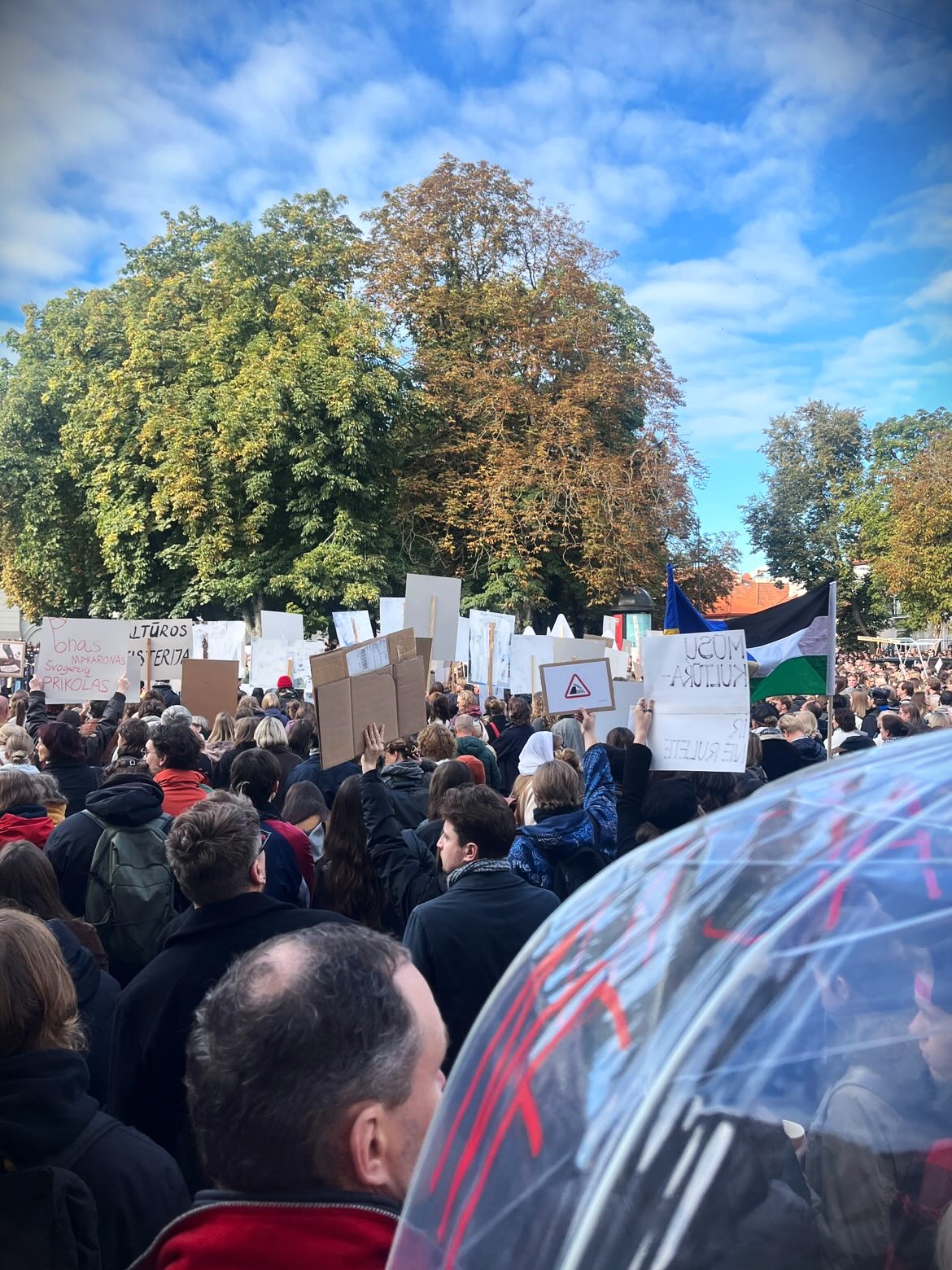
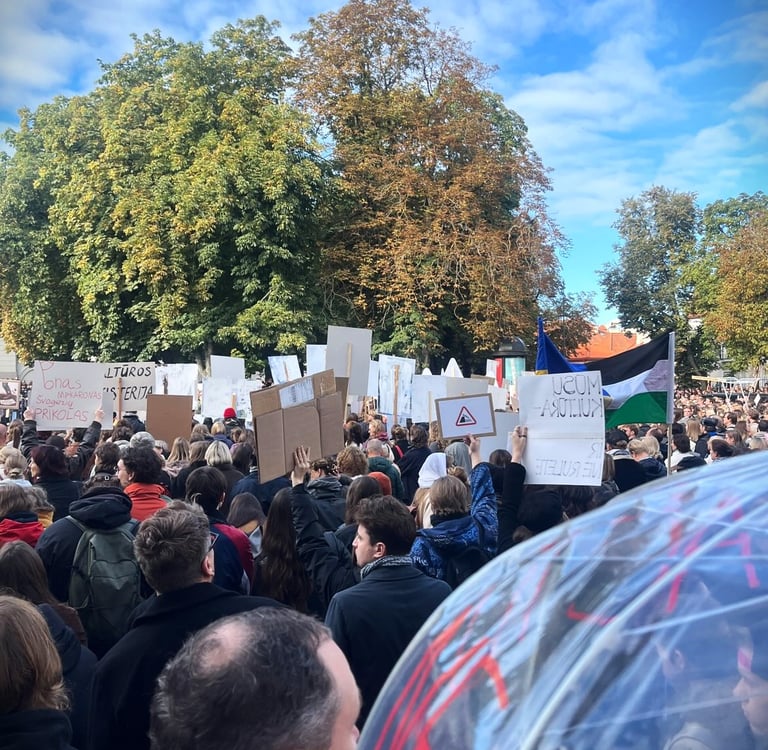
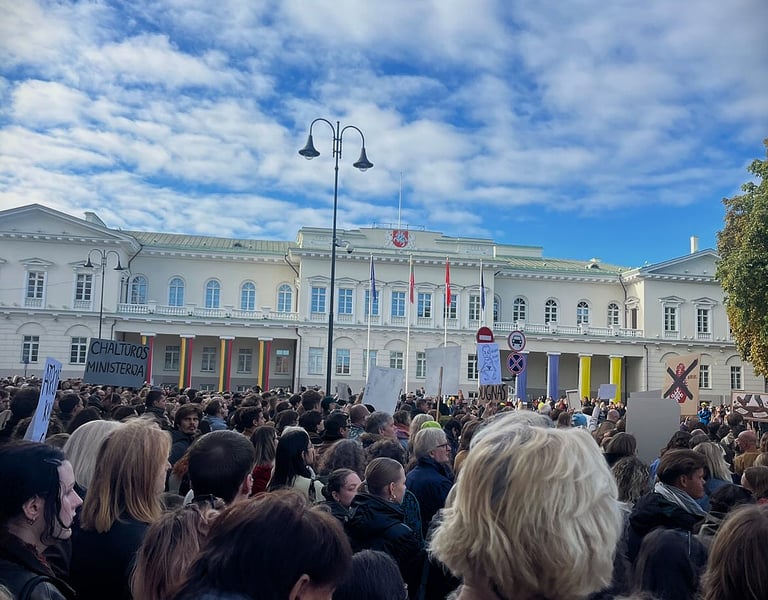
“Culture must remain autonomous, not become a propaganda tool” declared one protest banner. Prominent figures from literature, theatre, film, and visual arts spoke out against the decision, arguing that culture is not only a creative space but also a pillar of democratic dialogue.
Actress Gabrielia Kuodytė also expressed: “It was not surprising at all that so many people from the cultural sector joined and got involved. I think we would have protested even if it had been raining or snowing, and we would have stood our ground until the very end.”
The Lithuanian Artists’ Union and National Association of Cultural Institutions called the government’s move “an attack on creative freedom” and demanded the resignation of the newly appointed minister, whose qualifications and political alignment have been widely questioned.
Public opinion was divided. An LRT-commissioned Norstat poll conducted Oct. 1-6 found that 45 percent of Lithuanian residents supported the cultural protests, while 32 percent opposed them and 23 percent had no opinion.
Artists join journalists in massive free speech demonstration
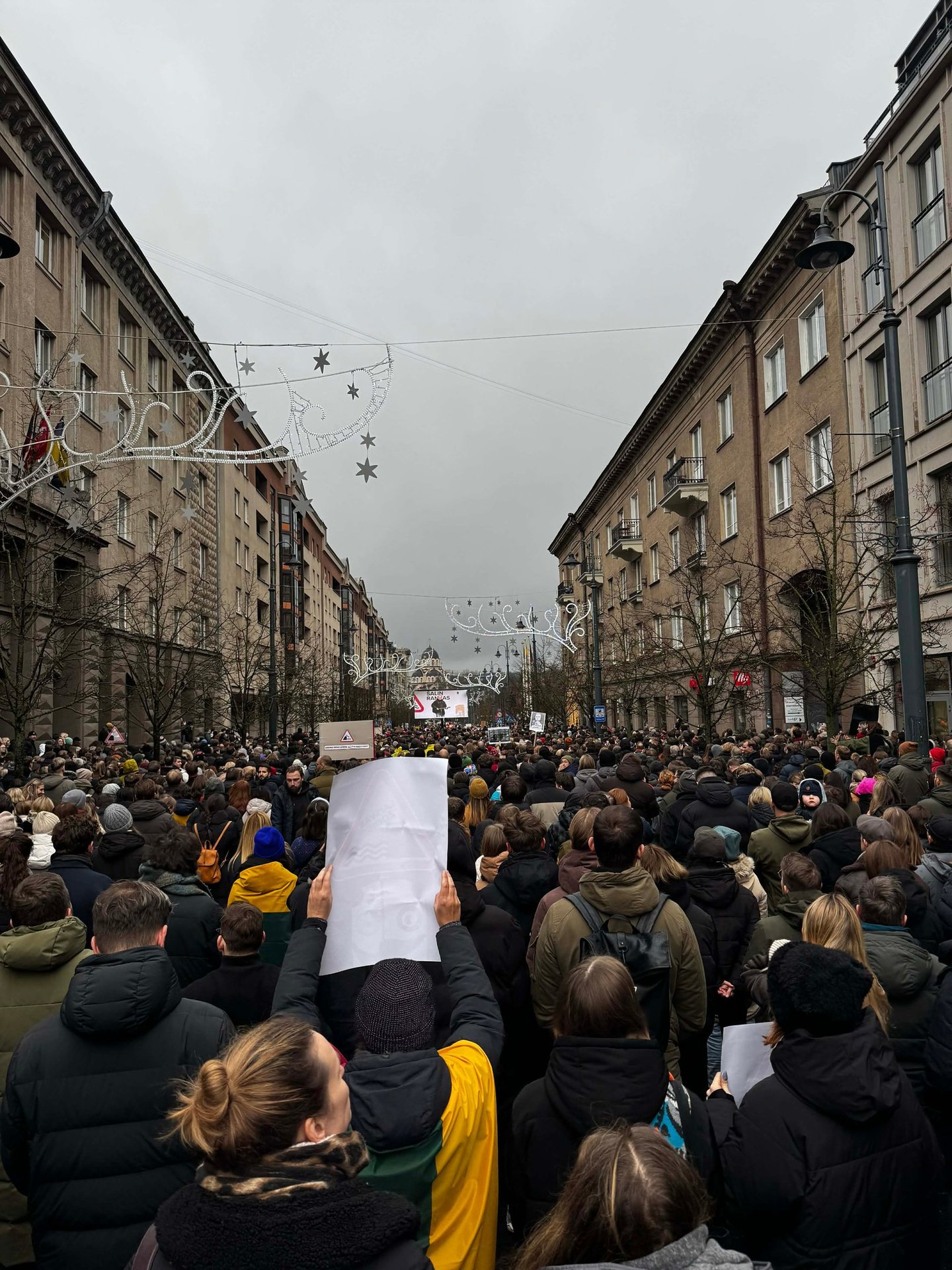
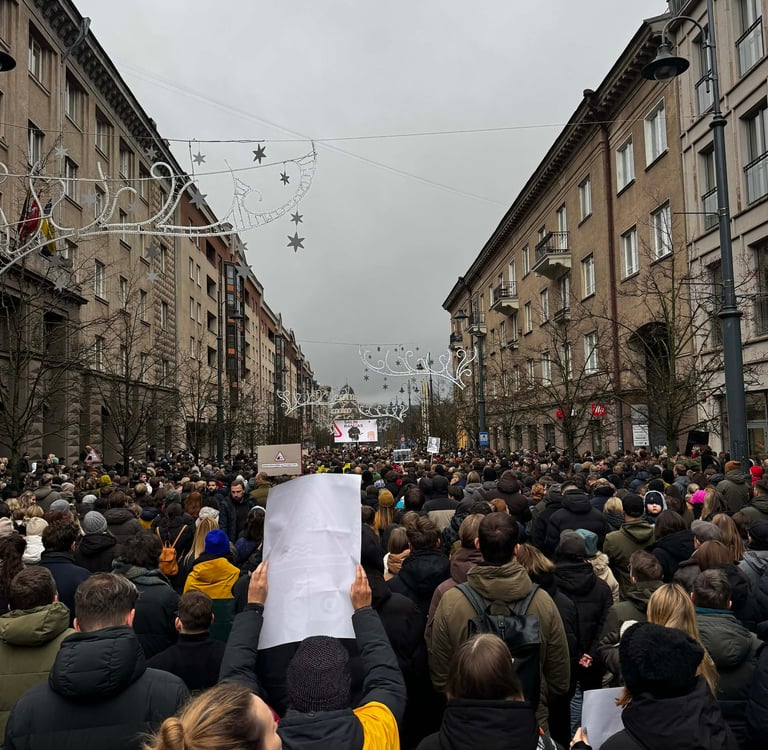
One of the protesters, Zigmas, a student in Vilnius shared: "All public transport was packed. I got on the bus and it was a really good experience to see people holding posters and talking to each other, because the protest took place at an unusual time, in the middle of the week, at lunchtime, so when you see all these people on buses and in the streets, going in the same direction, you realize that they are all going to the protest, so it was quite a unifying feeling."
Protesters including journalists, students, activists, and many of the same artists who marched weeks earlier, carried signs reading “Free the Press, Free the People” and “Democracy needs free media!”. Their chants echoed through the streets – “Hands Off LRT!”
The journalists community requested not to amend the law, but to repeal it altogether and leave the old system in place. Musicians, actors, and visual artists gave speeches and performances at the rally, expressing solidarity with journalists under pressure and drawing connections between artistic and media freedoms. One popular chant blended themes from both protest waves: “No culture, no truth – no democracy!”
Shared concerns, shared resistance
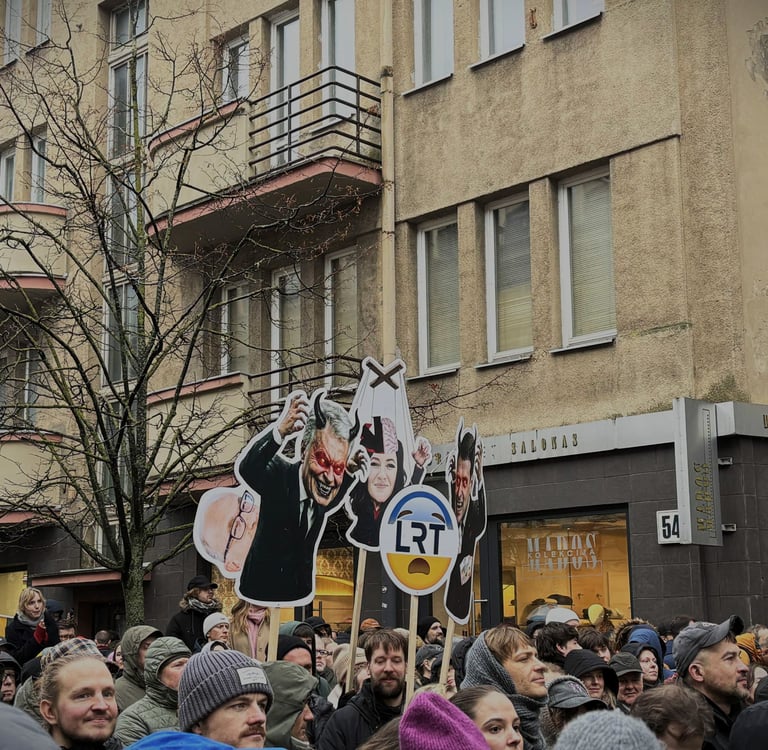
Both protests and movements were united by the same cultural and journalistic communities. It is a shared belief that Lithuanian democracy is being tested by attempts to centralize power and undermine institutional independence. While the cultural protests were initially dismissed by some politicians as symbolic or exaggerated, the swelling ranks at the free speech protest showed that public concern is growing, not fading.
The initiators of the event have repeatedly mentioned in press releases and public statements that the goal is to avoid the fate of Hungary and other post-Soviet states, where the first step toward state control and manipulation is the transfer of control of national television into the hands of the government.
Both the Lithuanian Journalists' Union and independent cultural organizations have issued joint statements calling on parliament to reconsider both the culture ministry appointment and the LRT law changes. They are also urging the European Union and international media watchdogs to monitor developments in Lithuania closely.
A deeper political rift
These protests have also exposed deeper cracks within the governing coalition. The Social Democratic Party, which leads the coalition, is under growing internal and public pressure to distance itself from Dawn of Nemunas party. The party’s controversial figurehead, Remigijus Žemaitaitis, was recently convicted of inciting hatred against Jews, further damaging the party’s standing and raising concerns about the values guiding current governance. Lithuania’s Constitutional Court previously found that Nemunas Dawn leader Žemaitaitis violated his oath, and a Vilnius court in December convicted him of inciting hatred against Jews and minimizing the Holocaust. Žemaitaitis has denied his fault and said he would appeal.
That broader pattern became even clearer in early December, when concerns over media freedom sparked another mass protest. This time, the demonstration drew an estimated 10,000 people to central Vilnius. The demonstration, held outside the Parliament and the Martynas Mažvydas National Library, was organized in response to proposed amendments to the Lithuanian National Radio and Television (LRT) Law.
The amendments, pushed by the same ruling coalition, would allow parliament to dismiss LRT’s director general with a simple majority vote which would significantly lower the threshold and could increasing political leverage over the public broadcaster. Additionally, the parliament imposed a three-year budget freeze which could weaken LRT financially.
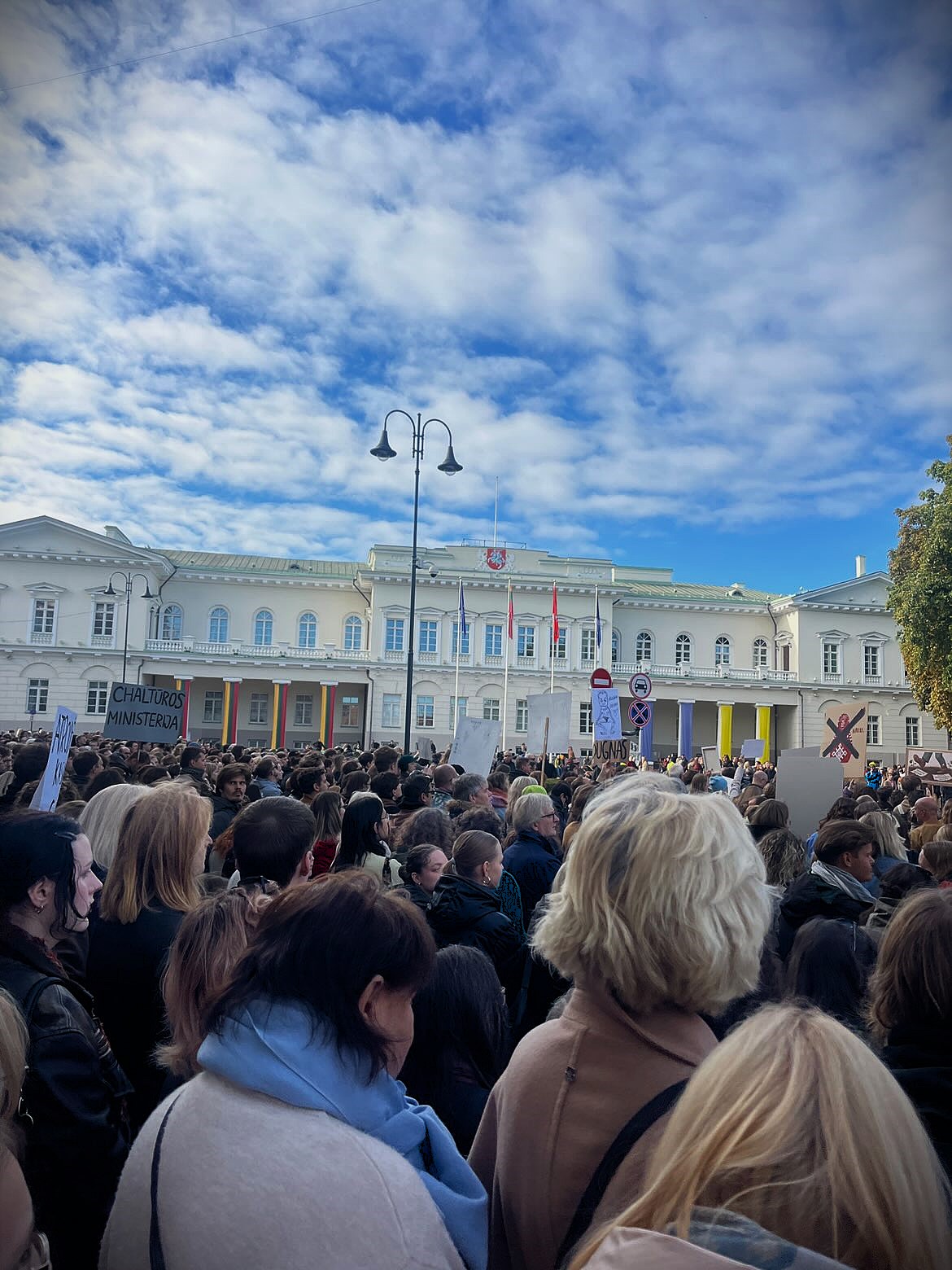
In early October, thousands of artists and cultural professionals across Lithuania took to the streets in what became known as the Cultural Revolution. The protests were sparked when government's party decision to hand control of the Ministry of Culture to the Dawn of Nemunas political party. According to the protest organizers, the Culture Assembly (Kultūros asamblėja in Lithuanian) the Ministry of Culture’s transfer to Dawn of Nemunas was opposed because the group describes the party as populist and associated with anti-European, antisemitic and pro-Russian narratives. The assembly said the decision raised concerns about censorship, minority voices, historical memory and artistic freedom.
Gabrielia Kuodytė, a Lithuanian theater and film actress, teacher, and organizer of various initiatives, expressed: “Tragic. There has never been such an ignorant person with no experience in the field of culture. I think that some people underestimate the importance of culture in society. Society is unimaginable without culture. Take curtain patterns, for example - even that is culture.”
Artists organized rallies, performances, and symbolic demonstrations in major cities including Vilnius, Kaunas, and Klaipeda. The protests began after artists and cultural organizations objected to the government’s decision to place the Ministry of Culture under Dawn of Nemunas, a coalition party.
The road ahead
As Lithuania approaches 2026, the protests have clearly demonstrated one thing: civil society remains active and is monitoring every move made by lawmakers. Artists and journalists are two professions that, historically, are linked to Lithuanian identity and resistance, and which joined forces to defend not only their professions but also the very foundations of liberal democracy during the Soviet era.
Regardless of whether the ruling coalition adjusts its course or further strengthens its position, it now faces a newly mobilized public that is not afraid to express its opinion and is prepared to defend its voice as long as necessary.
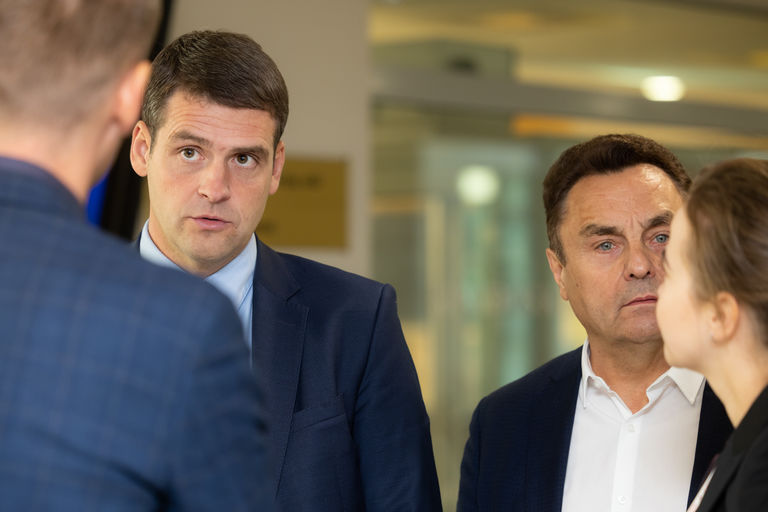
At left, Remigijus Žemaitaitis, leader of Dawn of Nemunas, is viewed critically by many protesters and politicians.
Photo: Olga Posaškova via ©, Lietuvos Respublikos Seimo archyvas (Lithuanian Parliament archive)
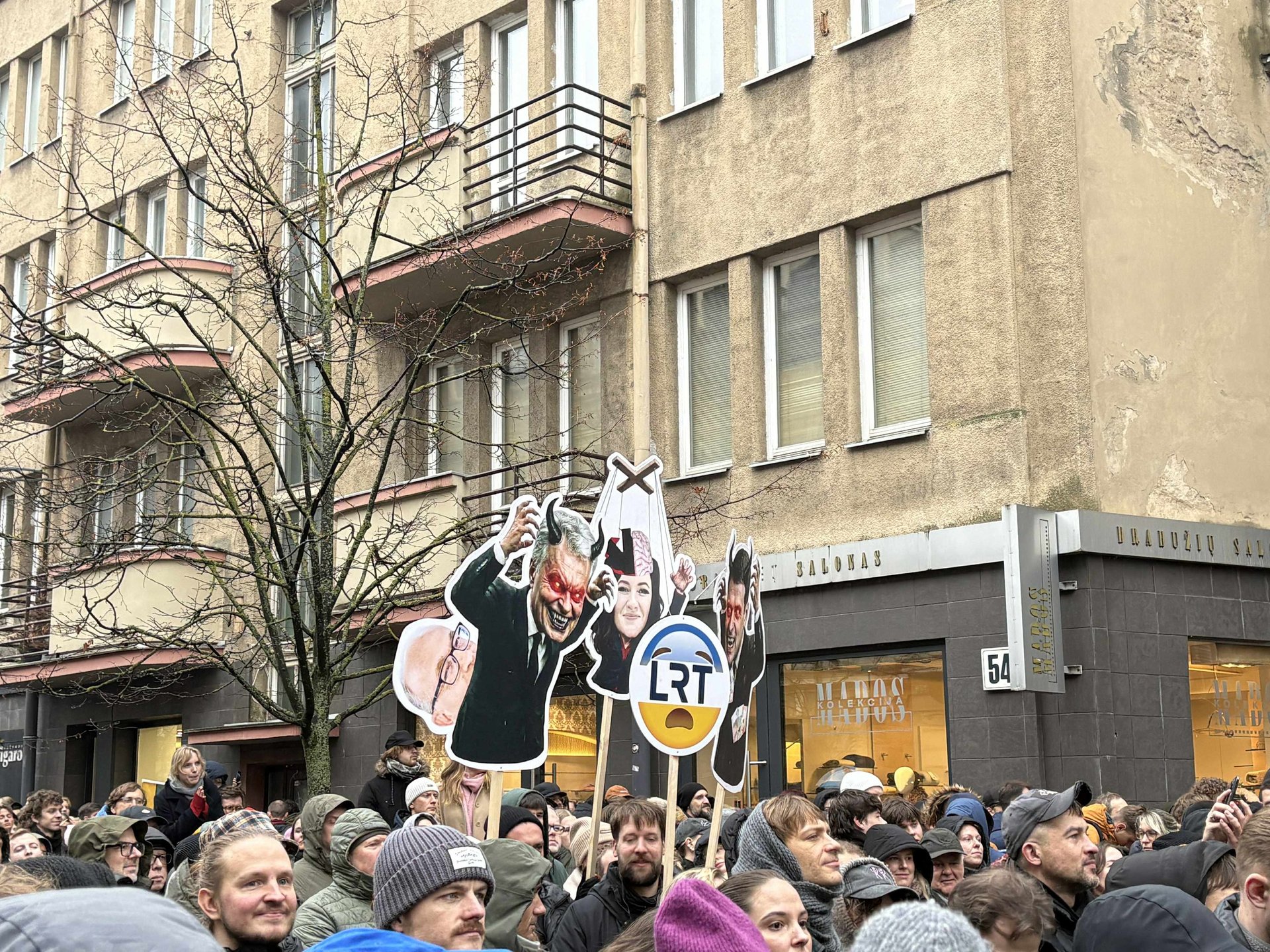
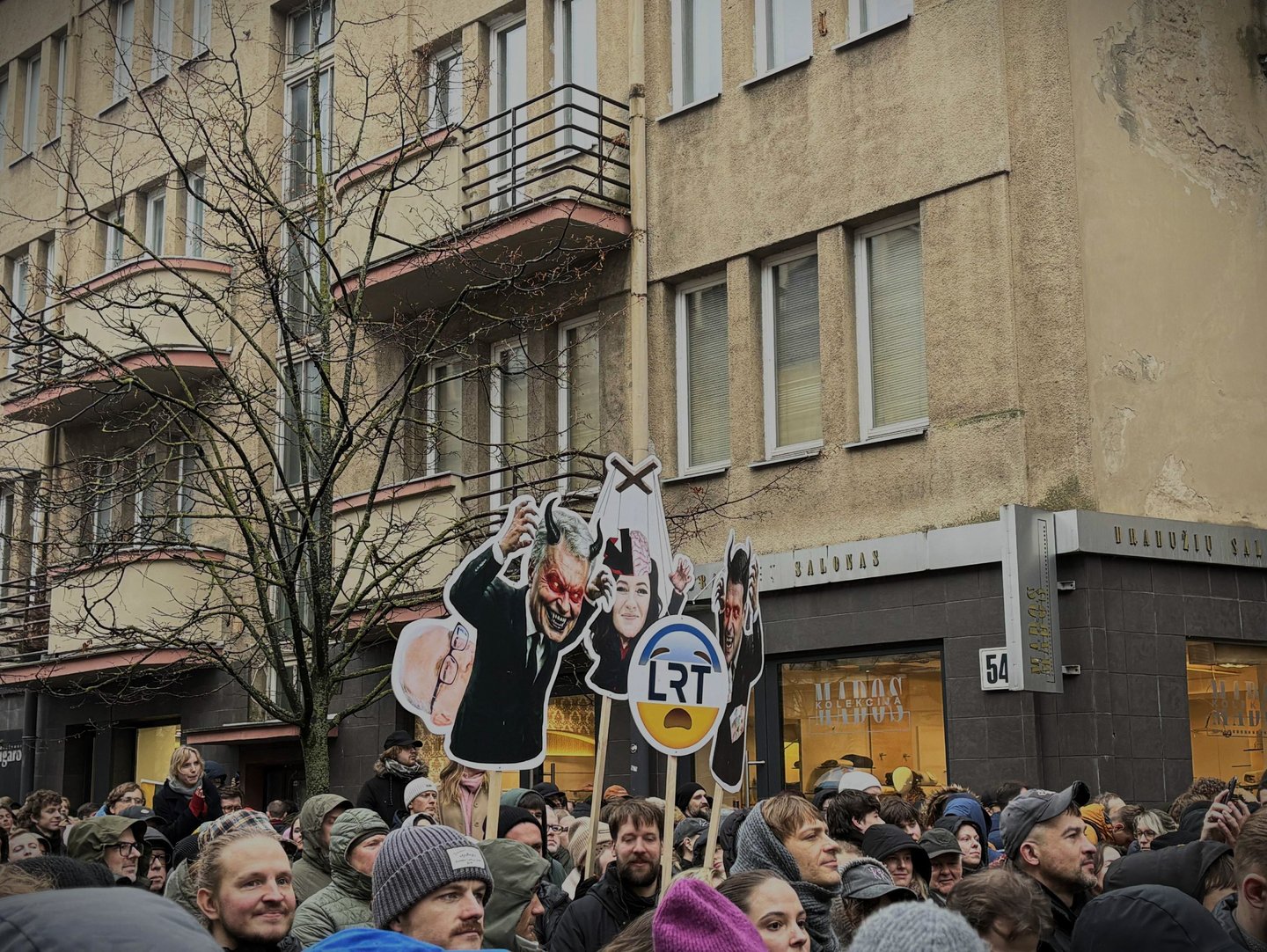
Poster of Lithuania’s president, prime minister and the leader of the Dawn of Nemunas party. Protesters came up with lots of creative ideas to spread their message. Photo provided by a protest participant.
The exact number of participants remains unknown, but official sources claim that between 10,000 and 30,000 people may have taken part in the protest. Photo provided by a protest participant.
The first wave of protests against the new Minister of Culture took place in October. Protesters gathered outside the presidential palace with the aim of drawing the president's attention.
Photo provided by a protest participant Raminta Bačiuliūnaitė